
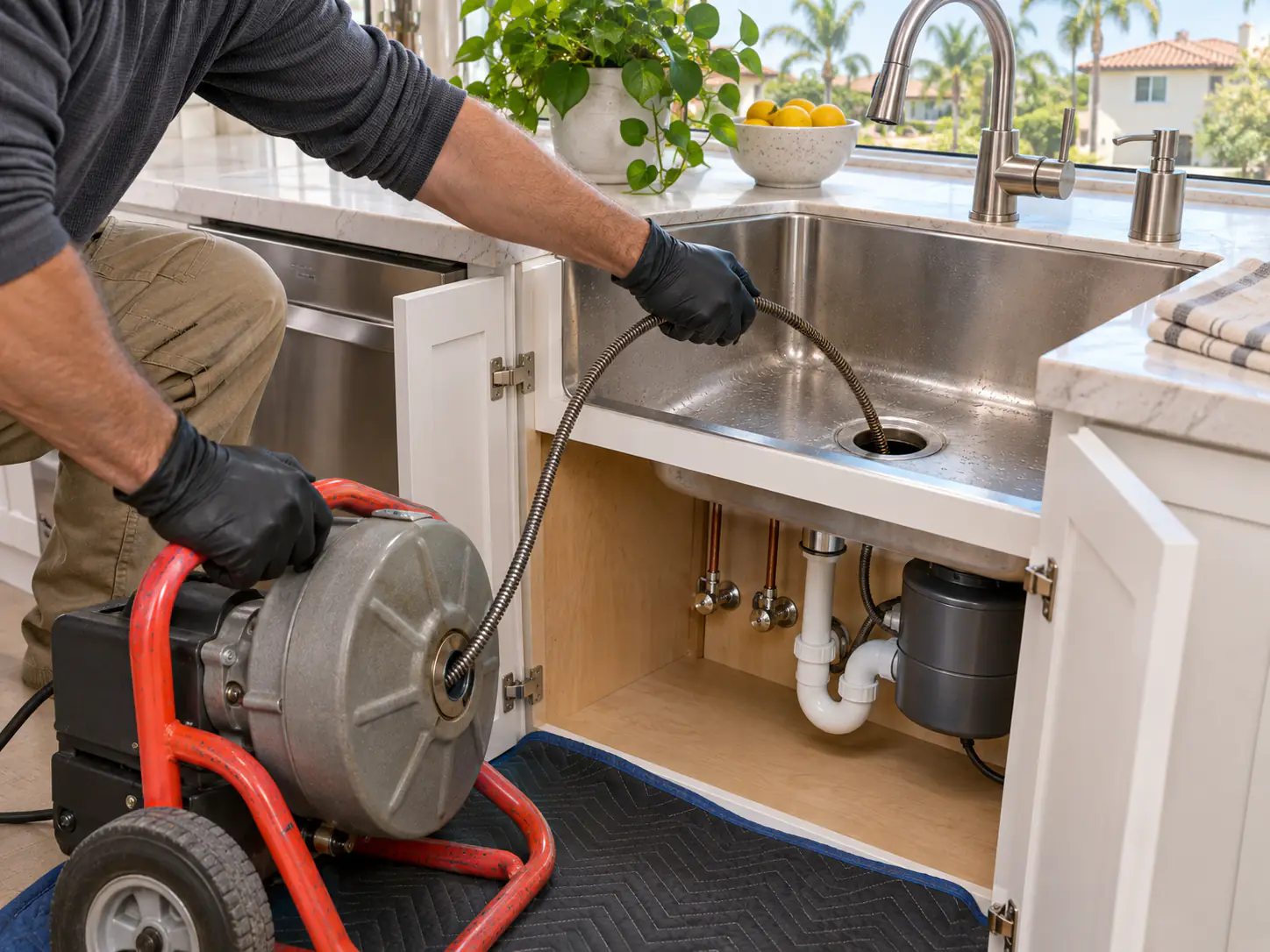
Clearing kitchen, bathroom, laundry and tub drains that run slowly, gurgle or back up. We look at whether one fixture or several are affected, because that tells us whether the restriction sits in a branch line or further down the system.
Residential plumbing · Laguna Niguel, CA
Rapid Plumber Laguna Niguel: Plumbing Repair That Starts at the Source
Searching for a Plumber Laguna Niguel homeowners can count on? You want someone who finds out why the problem happened, explains it in plain language, and fixes it without guesswork. That is how we approach every drain, leak, water heater, sewer, fixture, and water line call in local homes.
What is happening at home?
Pick the closest match to jump to the right service.
Not sure? Call (949) 920-1216 and describe what you see.
Six core services
Residential Plumbing Services for Laguna Niguel Homes
Most plumbing calls fall into one of six families. Each one has its own symptoms, its own diagnostic steps, and its own page with more detail. Here is where each service begins and what it typically covers.
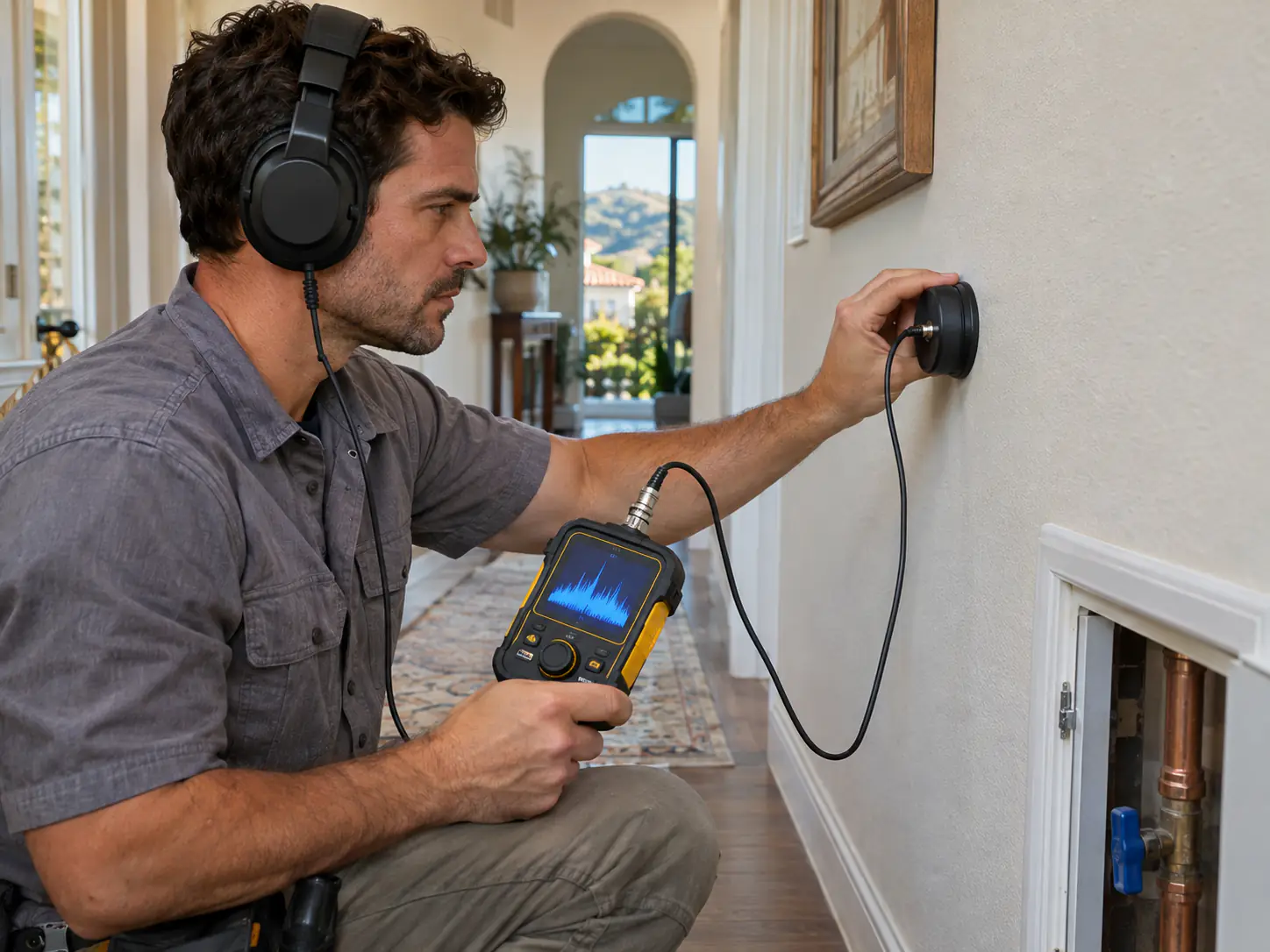
Tracing pressurized water leaks you cannot see, from a supply line behind a wall to a line under the floor. The goal is to pinpoint the source first so that any access opening is as small and well placed as practical.
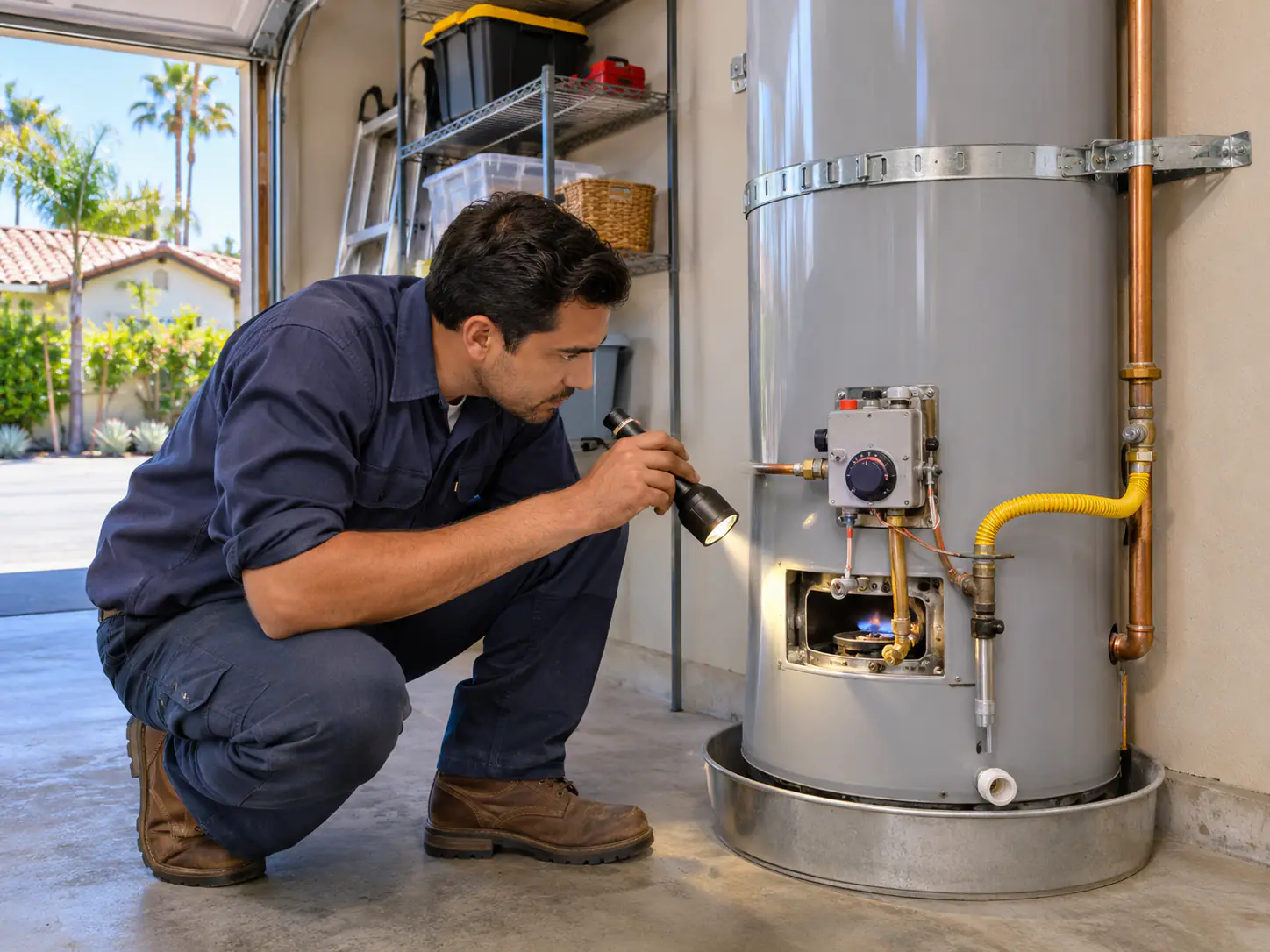
Diagnosing water heaters that stop heating, run out quickly, swing in temperature or leak, then deciding together whether a repair makes sense or whether a replacement fits your household better.
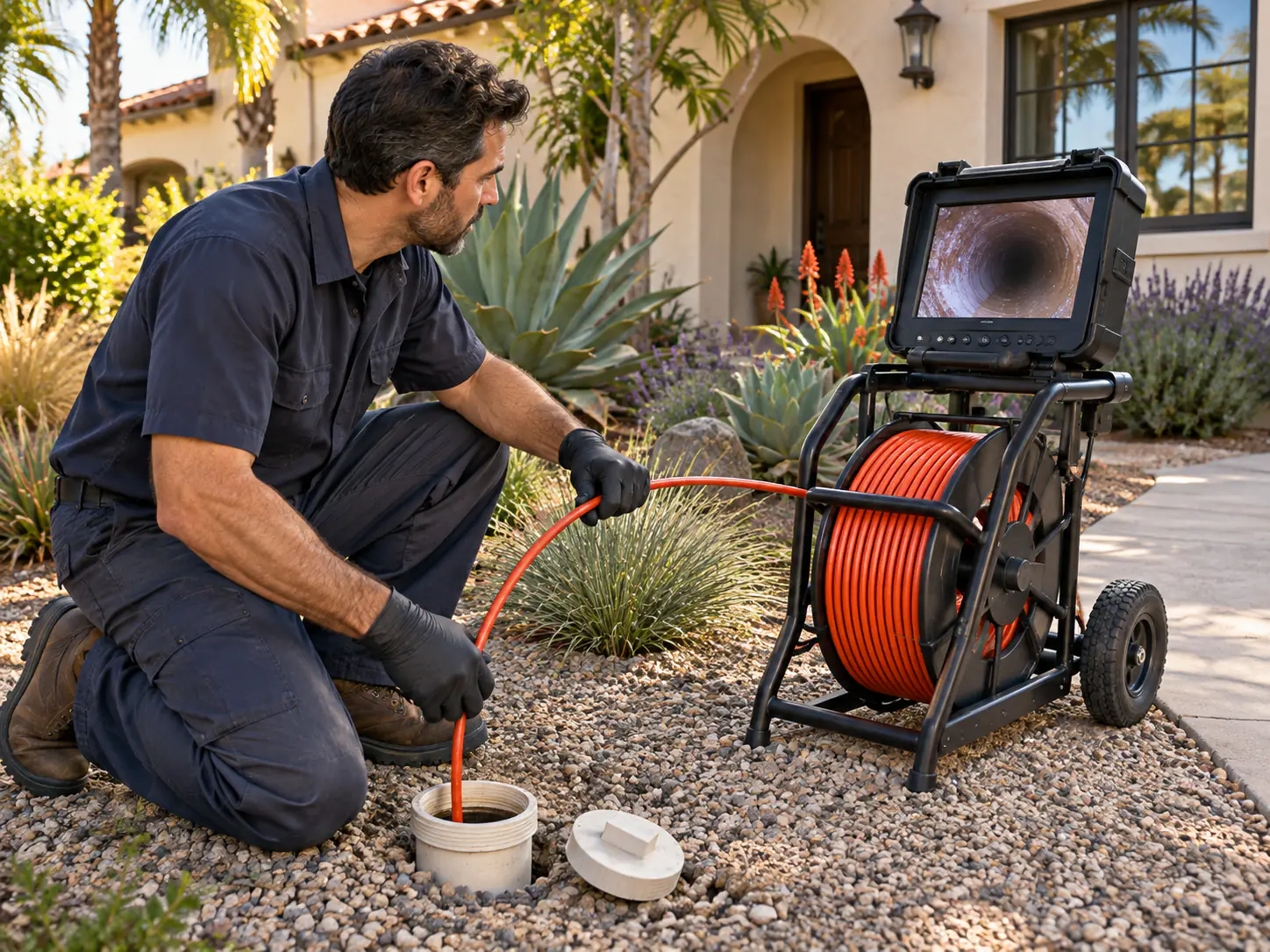
Investigating the main drain and sewer lateral when backups involve multiple fixtures or keep returning. Camera inspection, where appropriate, helps separate a blockage from a sag, an offset joint or a cracked pipe.
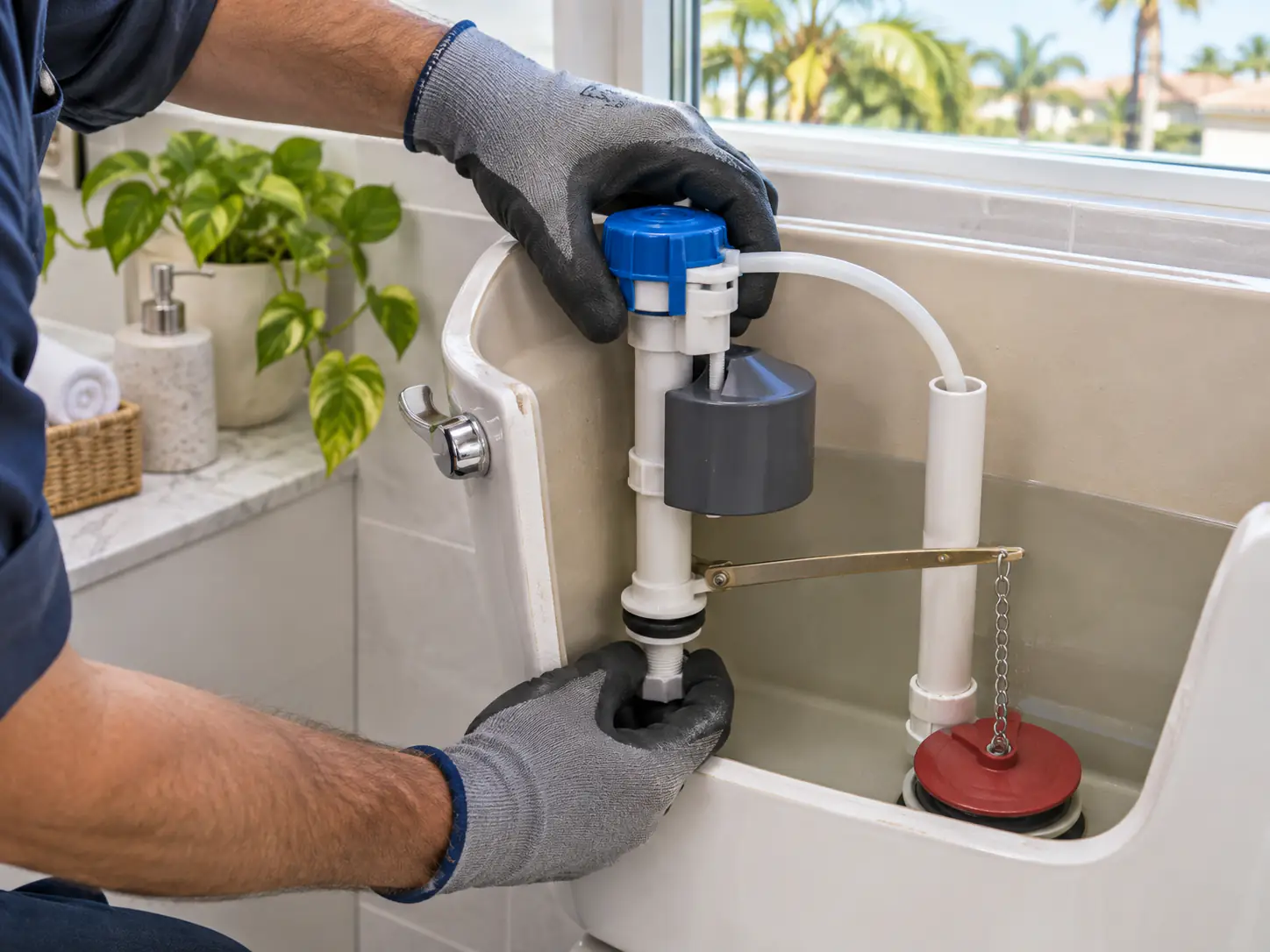
Fixing the problems you can see and hear: toilets that run or flush weakly, water at the base of the bowl, faucets that drip or leak at the handle, and worn supply lines and shutoffs under the sink.
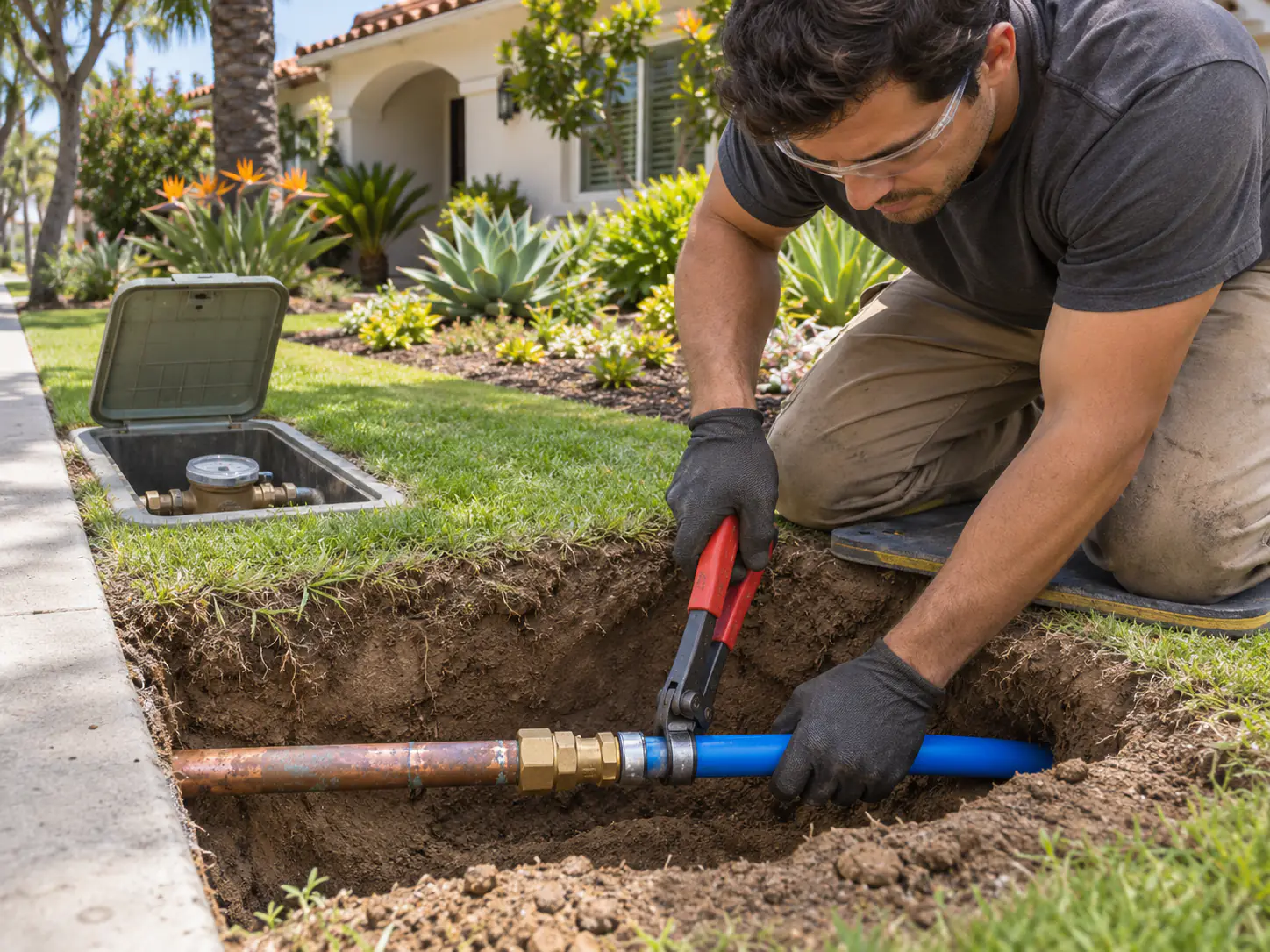
Evaluating the pressurized line that feeds your home when pressure drops everywhere, the meter keeps moving, or soil stays wet without explanation. We weigh a point repair against replacing a section or the full line.
Read the signs
Common Plumbing Symptoms and What They Can Point To
A symptom is a clue, not a diagnosis. The same gurgle or wet spot can come from very different causes, so the table below shows the most common possibilities and the place we would usually start looking.
| What you notice | What it could indicate | Where we usually start |
|---|---|---|
| One slow sink or tub | Hair, soap residue, grease or debris in that fixture's trap or branch line. | Drain cleaning at the affected fixture |
| Toilet gurgles when the washer drains | A restriction further downstream or a venting issue affecting several fixtures. | Checking which fixtures share the line before clearing |
| Water comes up in a tub or floor drain | A blockage in the main drain or sewer lateral rather than in a single fixture. | Sewer line evaluation |
| Higher water bill with no change in use | A running toilet, a dripping fixture or a hidden supply leak. | Fixture checks, then leak detection |
| Warm spot on a floor | Possible hot water line leak below the floor surface. | Isolating the hot side and tracing the source |
| Rusty or discolored hot water only | Sediment or internal wear in the water heater tank. | Water heater inspection |
| Low pressure at every fixture | A pressure regulator issue, a partly closed valve or a problem on the main supply line. | Pressure testing, then water line evaluation |
| Toilet refills by itself | A worn flapper or fill valve letting water seep into the bowl. | Toilet repair |
If water is actively spreading, shut off the fixture valve or the main water shutoff if you know where it is and can reach it safely, then call. Avoid opening walls, handling gas controls, or touching electrical equipment near standing water.
Source diagnosis
Why We Diagnose Before We Repair
A clog cleared without knowing why it formed often returns. A patched leak can hide a second failure nearby. A new water heater will not fix hot water problems caused by a mixing valve or a long, uninsulated run. That is why our first job on any visit is to work out where the problem actually starts.
Diagnosis usually begins with a conversation: when you first noticed the issue, which fixtures are involved, and whether anything changed recently, such as a remodel, a new appliance, or a period when the home was empty. From there we observe the system working, isolate sections where we can, and test before drawing conclusions.
Once the source is clear, we explain what we found, what it means for your home, and the repair options that fit. You decide how to proceed before any work begins.
Questions a good diagnosis answers
- Is the problem limited to one fixture, one area, or the whole house?
- Is it on the supply side, which is pressurized, or the drain side, which relies on gravity?
- Is this the cause, or a symptom of something further along the line?
- Can the affected part be repaired, or has it reached the point where replacement is more sensible?
What to expect
From Your First Call to a Tested Repair
Every home is different, but the sequence stays consistent. Knowing what happens next makes it easier to plan your day and to make decisions with confidence.
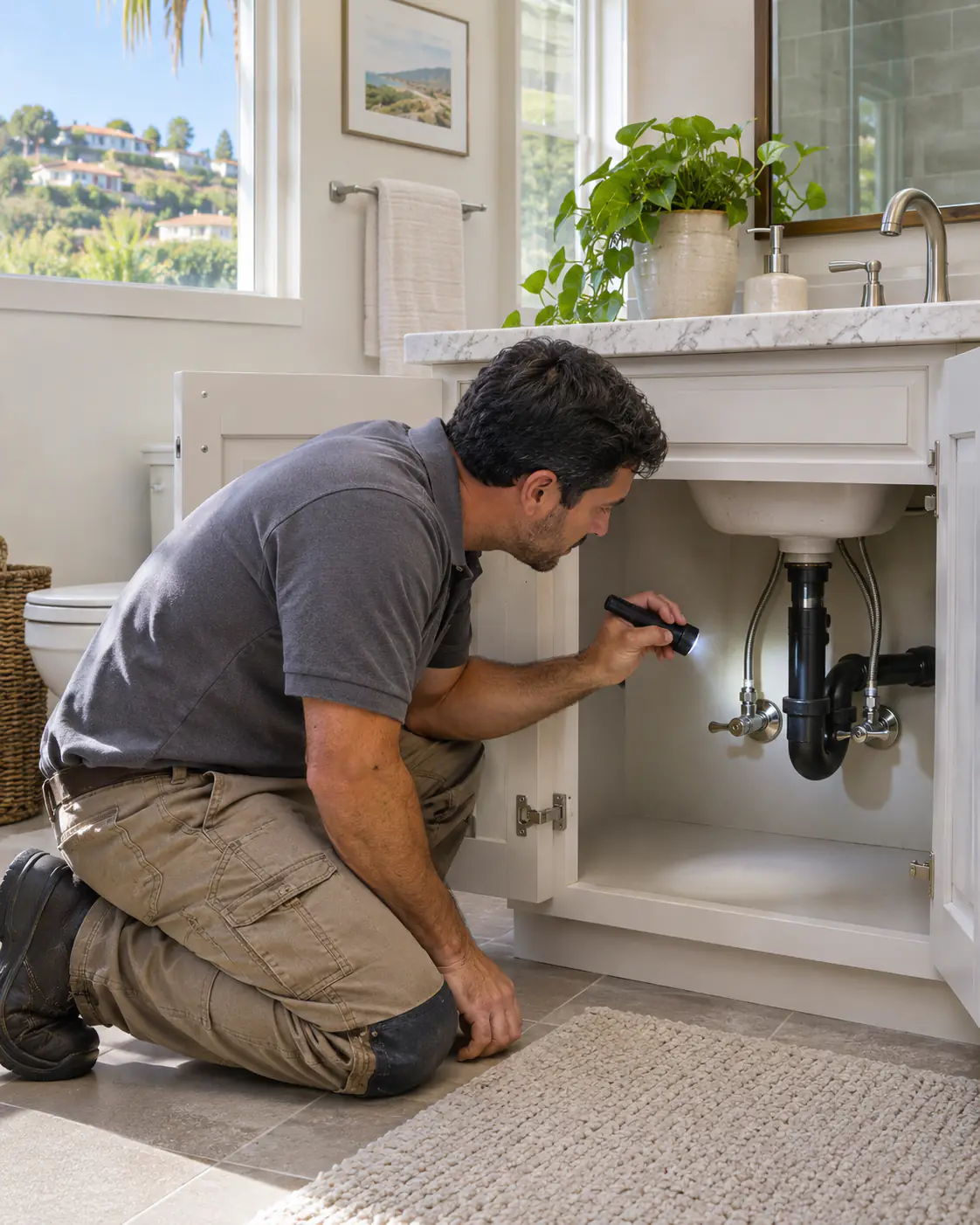
Respect for your home runs through every step. That means covering floors along the path to the work area, keeping tools and parts contained, telling you before water is shut off, and leaving the space as tidy as we found it. If a repair needs a follow-up visit, such as returning after a part arrives, we explain why and what happens in the meantime so nothing is left unclear.
-
You call and describe the problem
Tell us what you are seeing, where it is happening, and how long it has been going on. We ask a few focused questions and let you know when a visit can be arranged.
-
We arrive and look around first
Before touching anything, we look at the affected area, ask about history, and protect floors and nearby surfaces in the work zone where needed.
-
We test and isolate the source
Running fixtures, observing the meter, checking pressure, or isolating sections of piping helps narrow the cause down to a specific location and failure.
-
You get findings and options
We explain what failed and why, describe the repair options that apply, and talk through what affects the cost so you can choose the approach that fits.
-
We complete the agreed repair
Work follows the scope you approved. If something unexpected appears once a fixture or panel is opened, we stop and talk with you before the scope changes.
-
We test, clean up and walk you through it
The repair is tested under normal operating conditions, the work area is cleaned, and we show you what was done and anything worth keeping an eye on.
Making the call
Repair or Replace? The Factors That Decide It
There is rarely a single right answer. A repair is often the sensible choice, and sometimes replacement saves money and disruption over time. These are the factors we weigh with you.
Often points to Repair
- The failure is isolated to one part, such as a valve, flapper, cartridge, or short section of pipe.
- The surrounding piping or fixture is in sound condition with no signs of widespread corrosion.
- Replacement parts are available and compatible with the existing fixture or system.
- This is the first failure of its kind rather than a repeating pattern.
- The equipment still meets your household's needs for capacity and performance.
Often points to Replacement
- Similar failures keep appearing in the same run of pipe or the same fixture.
- The tank, body or pipe wall itself is leaking, not just a fitting or seal.
- Parts are no longer made, or a repair would require several components at once.
- The repair cost approaches a meaningful share of the cost of replacement.
- Your household has outgrown the equipment, such as a water heater that cannot keep up.
We will tell you which side of the line your situation falls on and why. If the case is close, we will lay out both options with their tradeoffs rather than push one. Age alone is a reason to look closer, not automatically a reason to replace.
Understanding cost
What Affects a Plumbing Estimate
Plumbing costs depend on what is found, where it is, and what it takes to reach it. Rather than quoting a number before anyone has seen the problem, we explain the factors that move an estimate up or down and confirm the scope with you once the source is known.
Location of the problem
A leak under an open sink cabinet is very different from one inside a wall, under a slab, or below a driveway. Access often shapes the job more than the repair itself.
Pipe and fixture materials
Copper, PEX, galvanized steel, cast iron, ABS and clay each behave differently and call for different repair methods, fittings and transitions.
Extent of the damage
One worn washer, a single cracked fitting, or a long run of corroded pipe each lead to a very different scope, even when the visible symptom looks the same.
Diagnostic steps needed
Some problems are obvious on arrival. Others need isolation testing or a camera inspection before a responsible recommendation can be made.
Parts and equipment chosen
Fixture grade, water heater type and capacity, and replacement components all affect the final figure. We explain the options in plain terms.
Restoration and permits
Opening a wall or floor may require patching afterward, and some work may require a permit depending on the scope. We tell you when these apply to your job.
Local context
Plumbing in Laguna Niguel Homes
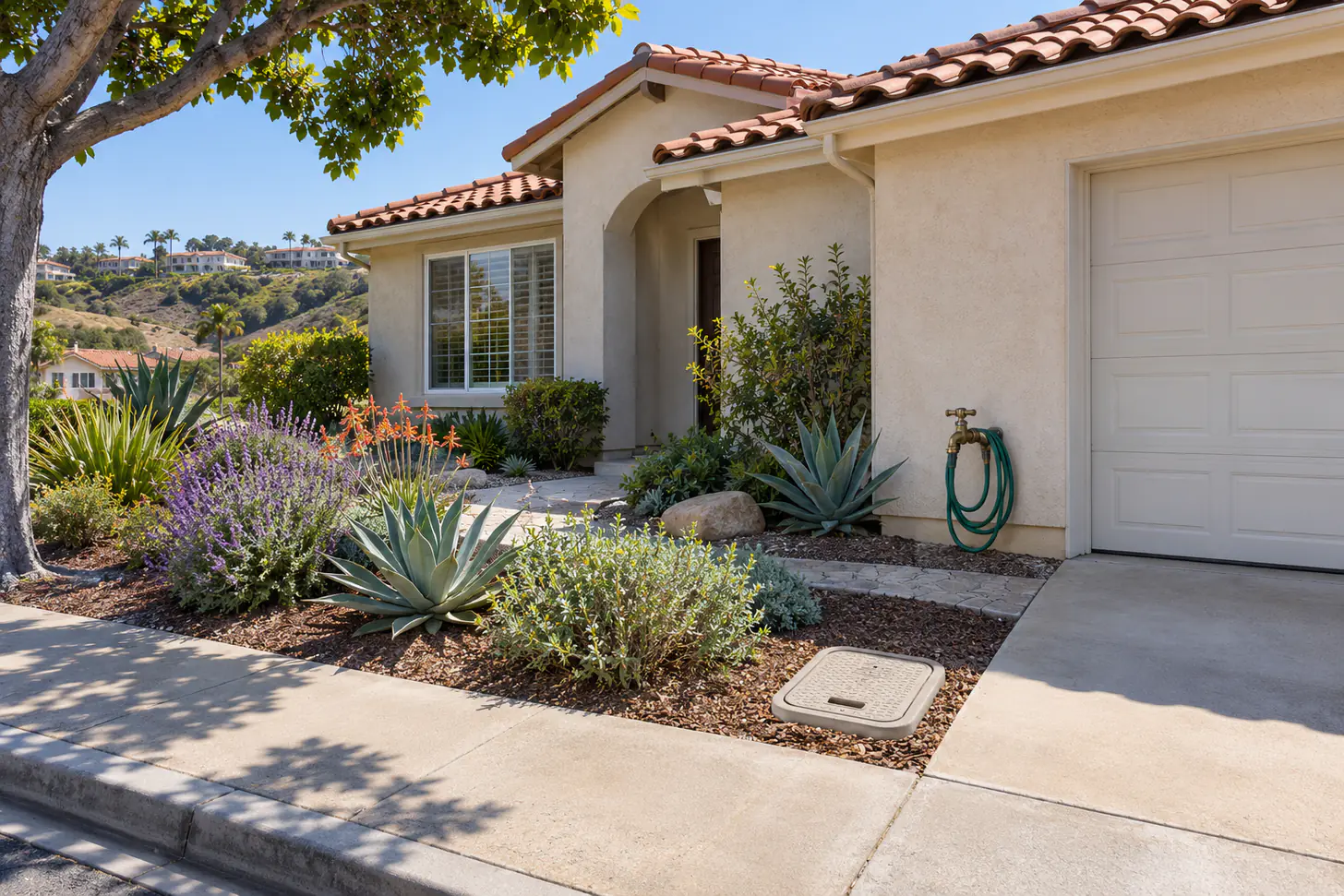
Laguna Niguel is a city of neighborhoods built over several decades, from hillside streets with views toward the coast to planned communities near Crown Valley Park and the open space around Laguna Niguel Regional Park. That variety matters for plumbing. Two houses a few blocks apart can have different pipe materials, different fixture ages, and different paths for water lines and drains.
Age differences between homes
An older home may still have original galvanized supply pipe or cast iron drains in some sections, while a remodeled kitchen next door has PEX and modern fixtures. Mixed systems are common after partial upgrades, and the transition points between old and new materials are worth checking when leaks or pressure problems appear.
Slab-routed plumbing, where present
Many Southern California homes are built on concrete slabs, and in some of them, supply or drain lines run beneath the slab. If your home is built this way, a leak under the floor behaves differently from one in a wall: you may notice a warm spot, a damp patch of carpet, or the sound of running water when nothing is on. Not every home is plumbed this way, so we confirm the layout before discussing repair options.
Hillside lots and long service runs
Homes on sloped lots sometimes have long distances between the meter and the house, or drains that run a considerable way to the street. Longer runs can affect pressure, make a leak harder to locate, and change what access looks like if a section needs repair.
Water quality and fixtures
Mineral content in water can contribute to scale on aerators, showerheads, valves and inside water heaters. If you notice white deposits or reduced flow at certain fixtures, we can check whether buildup is a factor. For specifics about your local water supply, your water provider's published water quality report is the authoritative source.
Whatever the age or layout of your home, we start by learning how its plumbing is set up, so that our recommendations fit the house you actually live in.
Homeowner questions
Plumbing Questions We Hear Often
How do I know whether I need a plumber or can wait?
If water is spreading, sewage is coming up through a drain, or you have no water at all, call right away and use a shutoff if you can reach one safely. A slow drain or an occasional drip can usually be scheduled, but waiting too long can turn a small repair into a larger one, especially with hidden leaks.
Do you work on homes only, or businesses too?
Our focus is residential plumbing for homeowners. Every page on this site is written with houses and their typical systems in mind, from kitchen drains to the water line that feeds the property.
Can you give me a price over the phone?
For most problems, an accurate price depends on what is found on site, especially where the problem is and how it can be reached. On the phone we can explain the factors involved and what the visit will look like. Once we have seen the issue, we explain the scope and options before work begins.
Where is the main water shutoff in my house?
It varies by home. Common locations include an exterior wall near where the line enters the house, a garage wall, or near the water heater. There may also be a shutoff at the meter box near the street. If you are not sure, ask us to point it out during a visit so you know where it is before you need it.
Why does my drain keep clogging after it was cleared?
A recurring clog usually means the underlying cause was not addressed. It could be buildup along the pipe walls, a belly or sag where debris settles, root intrusion, or a damaged section. If clogs keep returning, a closer look, sometimes with a camera, helps identify why.
What should I have ready when I call?
A short description of the problem, which fixtures are affected, when it started, and anything you have already tried. Photos can help. For water heaters, the brand and the information on the rating label are useful. We will also confirm your address and a good callback number.
Will you have to open walls or floors?
Not always. Many repairs are done through existing access points such as cabinets, access panels, or cleanouts. When access is needed, we work to locate the problem precisely first so the opening is as small and well placed as practical, and we explain it to you beforehand.
Talk to a Plumber About What You Are Seeing
Describe the problem, and we will tell you what we would check first and when a visit can be arranged. Clear answers, a tested repair, and a clean work area are the standard we hold ourselves to on every call.