
Symptoms That Call for a Closer Look
A single clogged sink is a drain problem. The signs below suggest the issue sits further down, in the line every fixture shares. The further down this list your situation falls, the stronger the case for investigating the sewer line itself.
- Watch
Several drains running slow
Sinks, tubs and toilets all draining sluggishly at the same time, rather than one fixture on its own.
- Investigate
Fixtures reacting to each other
Toilets gurgling when a tub drains, or water rising in a shower when the washing machine empties.
- Act soon
A recurring sewer backup
The main line has been cleared before, and the same backup comes back within weeks or months.
- Act now
Sewage at the lowest drain
Wastewater coming up through a tub, shower, floor drain or cleanout, often with a strong odor.
Different Causes, Similar Symptoms
Very different problems inside a sewer line can produce the same backup at the house. That is why clearing the line again and again without knowing why it blocks is rarely the best long-term answer.
| Cause | What it is | How it tends to behave |
|---|---|---|
| Blockage | Grease, wipes, paper or debris collecting at one point | Often clears well and may not return if the source is addressed |
| Root intrusion | Roots entering through joints or cracks in search of moisture | Clears temporarily, then returns as the roots regrow |
| Misalignment or sag | An offset joint or a low section where the pipe has settled | Waste and water collect at the low point and build up again |
| Structural damage | Cracked, broken, or collapsed pipe | Clearing may give little or no relief; repair is usually required |
How the Sewer Line Is Diagnosed
Find an access point
A cleanout is the preferred entry to the main line. Where there is no usable cleanout, other access options, such as removing a toilet, are discussed with you first.
Restore flow if needed
If the line is backed up, clearing comes first so the home is usable again and the pipe can be inspected.
Inspect with a camera where appropriate
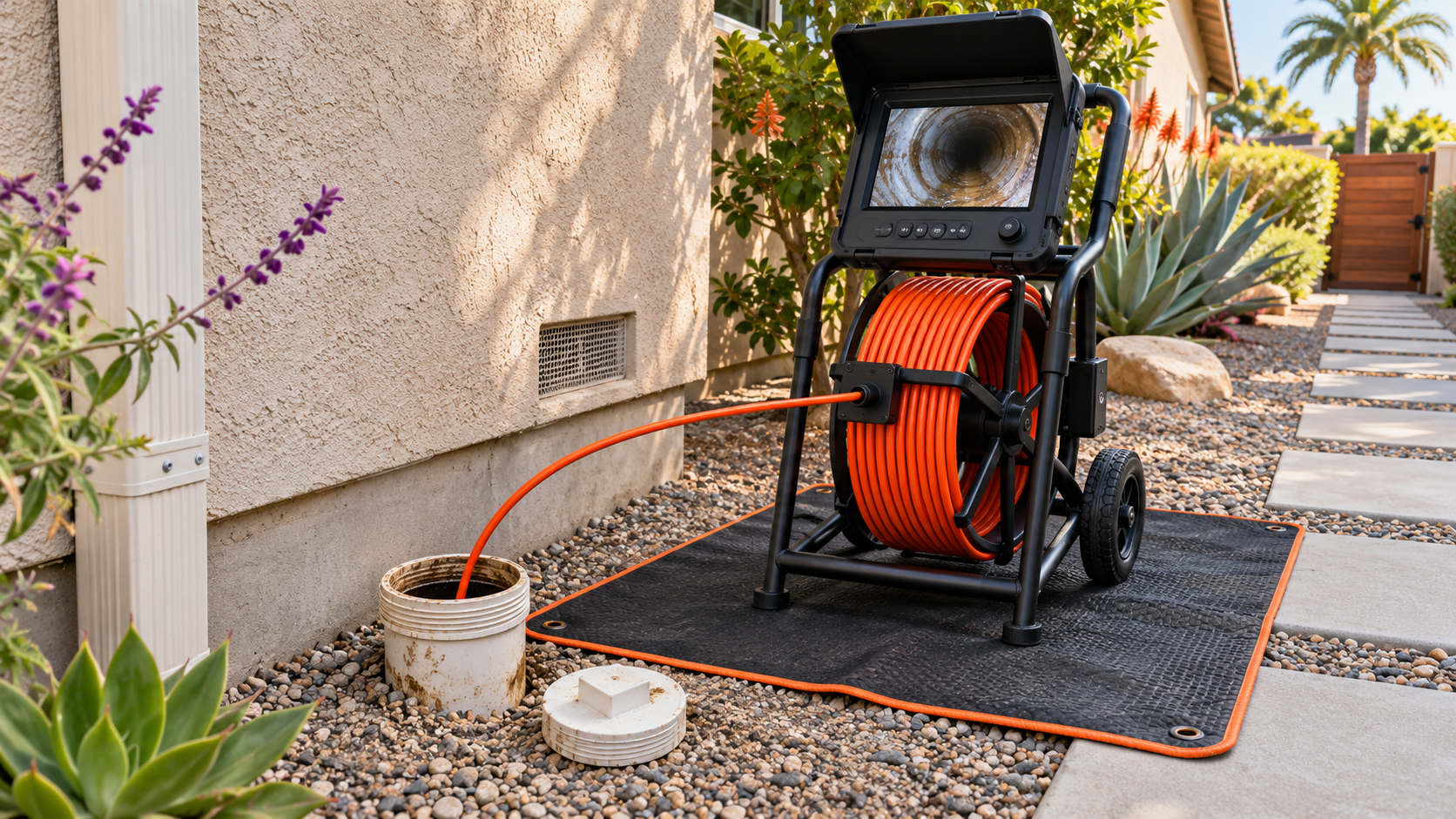
A sewer camera shows the interior of the pipe, revealing roots, offsets, sags, cracks and the approximate location and depth of any problem.
Review the findings together
We go over what the inspection shows and what it means for repair options before any decision is made.
Inspection footage is most useful when it is explained. We point out what a joint, a root mass or a low section looks like on screen, roughly where it sits along the line, and whether the condition looks isolated or repeated along the run. That shared understanding makes the repair conversation far more concrete than a description alone.
What Shapes Sewer Lateral Repair
Sewer lateral repair can range from a targeted fix at one joint to replacing a long run of pipe. The scope depends on several things:
- Location and depth. A problem near the house is usually easier to reach than one under a driveway, mature landscaping or a hardscape feature.
- Extent of damage. One cracked joint calls for a different approach than a line with roots at many joints or a long sagging section.
- Pipe material. Older clay or cast iron and newer plastic pipe behave differently and use different repair methods.
- Property configuration. Slopes, structures and the route the lateral takes to the public sewer all affect access.
Sewer work is one piece of our full lineup of home plumbing services. If the camera shows the main line is in good condition and the trouble is in a branch line, our drain cleaning page covers that path.
Same backup, again?
Tell us how often the line has been cleared and what came out.
Sewer Line FAQs
How do I know it is the sewer line and not just a clog?
A clog usually affects one fixture. A sewer line problem typically affects several fixtures at once, shows up first at the lowest drain in the home, and often causes fixtures to gurgle or back up when a different fixture is used.
Why do roots keep coming back after the line is cleared?
Clearing cuts the roots inside the pipe but does not seal the joint or crack where they entered. As long as that opening exists, roots can regrow. A camera inspection shows where they are entering so a lasting repair can be considered.
Can I use my plumbing during a sewer backup?
No. Avoid running water, flushing, or using appliances that drain until the line is cleared. Any water you send down will try to exit at the lowest opening, often a tub or shower.
Does every sewer repair require digging?
The method depends on the problem, the pipe and the site. Some situations can be addressed through existing access points, while others need excavation at the problem area. We explain what your specific repair would involve once the line has been inspected.