
Signs of a Hidden Plumbing Leak
Hidden leaks give themselves away indirectly. One sign alone may have another explanation, but two or three together are worth investigating.
- Your bill
Unexplained water use
A water bill that climbs while your habits stay the same is often the first clue. Comparing several billing periods helps show whether the change is gradual or sudden.
- Surfaces
Damp or stained surfaces
Bubbling paint, soft drywall, swollen baseboards, or a stain that grows slowly can mean water is reaching the surface from inside a wall or ceiling.
- Sound
Water moving when nothing is on
A faint hiss or trickle in a quiet house, especially at night, can indicate water flowing through a pipe that should be still.
- Floors
Possible below-slab leak
A warm patch on a tile floor, damp carpet with no spill, or cracks with moisture at the edges may point to a line running under the slab in homes plumbed that way.
How a Leak Is Traced to Its Source
Good leak detection narrows the search step by step. The aim is to know where the water is coming from before anyone cuts into a wall or floor.
Rule out the obvious
Running toilets and dripping fixtures are the most common causes of wasted water. We check these first because they are quick to confirm and quick to fix.
Read the meter
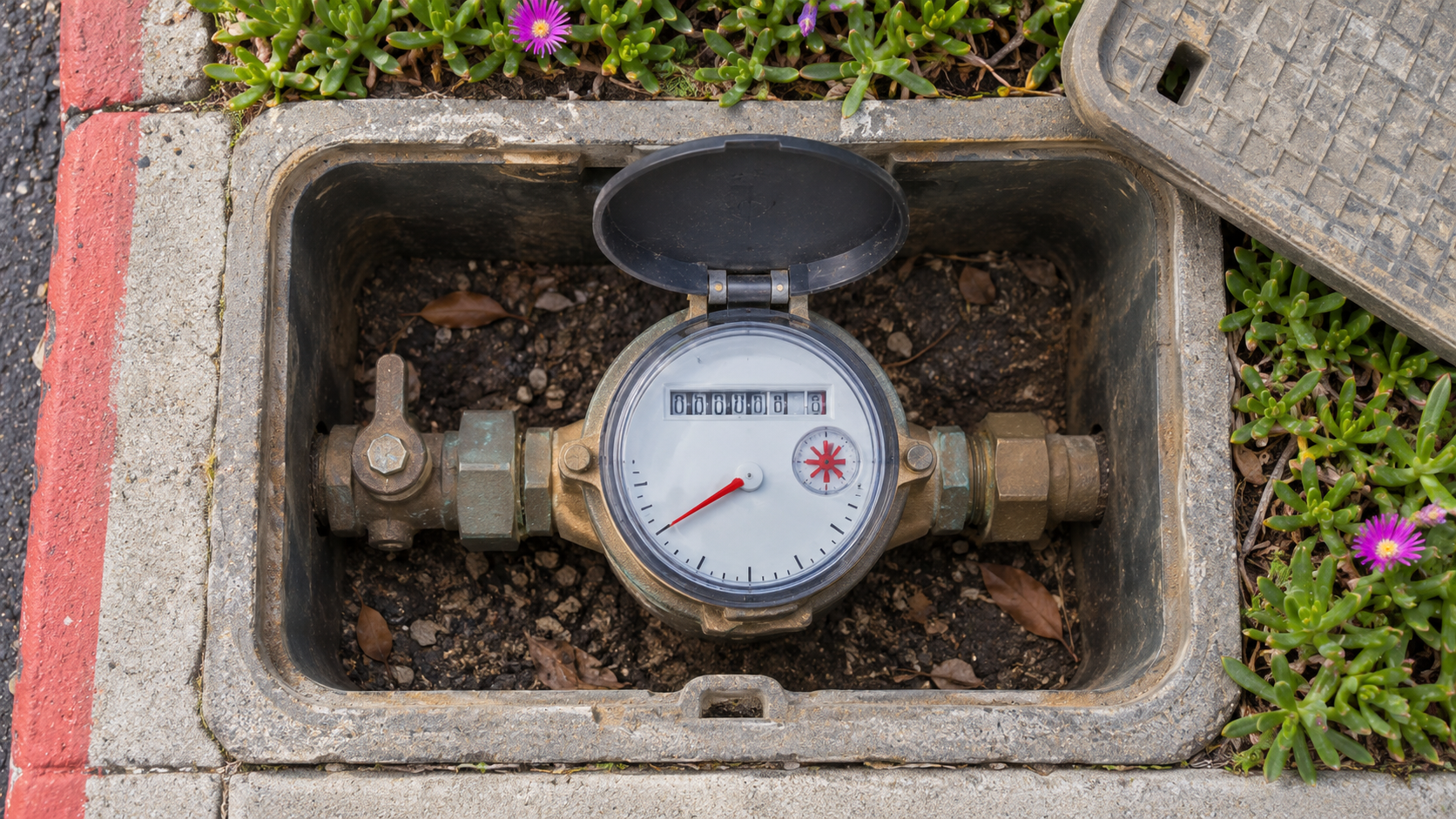
With every fixture and water-using appliance off, the water meter should stay still. If its leak indicator or dial keeps moving, water is escaping somewhere on the pressurized side.
Isolate sections
Closing individual shutoffs, or comparing the hot and cold sides, helps determine whether the leak is inside the home, on a specific branch, or on the line between the meter and the house.
Pinpoint the location
Professional source tracing combines what the isolation tests show with careful observation of the surfaces, the piping layout and the sound of the water to narrow the search to a specific area.
The methods used on a given visit depend on the home and the symptoms. We will explain what we are doing and why at each stage, and what each test tells us.
Supply Leak, Drain Leak, or Not Plumbing at All?
Not every wet spot comes from a pressurized pipe. Sorting out the type of water early prevents work in the wrong place.
Supply leakage
Water under pressure, leaking constantly whether or not anything is in use. It often moves the meter and tends to worsen over time.
Drain leakage
Water that appears only when a fixture is used, such as a shower pan or a drain joint under a sink. The meter stays still when fixtures are off.
Non-plumbing moisture
Condensation, irrigation overspray, roof or window leaks, and HVAC drain lines can all produce damp areas. If the source is not plumbing, we will tell you.
Access, Isolation and the Leak Repair Itself
Once the source is identified, the repair plan depends on three things: where the leak is, what the pipe is made of, and the condition of the piping around it.
Access
Leaks inside cabinets or near access panels can often be reached directly. Leaks in walls, ceilings or floors require an opening. Precise location work keeps that opening as small as practical, and we discuss where it will be before work starts.
Isolation
If a shutoff exists for the affected branch, the rest of the home may keep water while repairs proceed. If not, we explain how long the water will need to be off.
Repair scope
A single failed fitting may need only a localized repair. If the pipe around it shows corrosion, thinning or repeated failures, rerouting or replacing that section may be the more reliable fix. For below-slab leaks, options can include repairing in place or rerouting the line, depending on the layout. We describe the options for your situation rather than defaulting to the largest one.
Leak work is one part of the plumbing help for Laguna Niguel homeowners we provide. If the leak is on the main line between the meter and your house, our water line repair page covers that next step.
Meter moving with everything off?
That is worth a call. Note what you saw and when.
Leak Detection FAQs
How long can a hidden leak go unnoticed?
Small supply leaks can run for weeks or months before they show on a surface, especially inside walls or under floors. That is why a rising bill or a moving meter is often noticed before any visible damage.
What does a warm spot on the floor mean?
In homes with hot water lines under the slab, a warm area on the floor can indicate hot water escaping below the surface. Other causes are possible, such as radiant heating or a nearby appliance, so isolating the hot water side is part of confirming it.
Can you find a leak without tearing out walls?
The search itself relies on testing and observation rather than demolition. An opening is usually needed only for the repair, and when it is, accurate location work helps keep it small and in the right place. Where an access panel or cabinet allows, no new opening may be needed at all.
Should I turn off my water while I wait?
If water is visibly spreading or damage is getting worse, closing the main shutoff is sensible if you can reach it safely. If the only sign is a moving meter, you can usually keep using water normally until the visit.