
Common Water Heater Problems
Hot water complaints tend to fall into a handful of patterns. The pattern you describe helps narrow down which part of the system is involved.
| Symptom | Possible causes |
|---|---|
| No hot water | Ignition or burner problem on gas units, a failed element or tripped control on electric units, or a supply issue |
| Hot water runs out quickly | Sediment taking up tank space, a failing element or dip tube, or a unit too small for current demand |
| Temperature swings | Thermostat or control issues, a mixing valve problem, or a tankless unit struggling with flow rate |
| Popping or rumbling | Sediment on the tank bottom heating unevenly |
| Rusty hot water | Internal tank corrosion or a depleted anode rod |
| Water around the base | A fitting, valve or relief discharge, or the tank itself leaking |
Some of these overlap. Rumbling and short hot water supply often appear together because sediment both insulates the heat source and takes up space inside the tank. Rusty water that shows up only on the hot side points toward the heater rather than the supply piping, which is a useful check you can make at any faucet before calling. Noting when the problem started, and whether it came on suddenly or gradually, also helps separate a single failed part from general wear.
Hot Water Heater Repair or Water Heater Replacement?
This is the decision most homeowners face, and it deserves more than a guess based on age alone. We look at four factors together.
The diagnosis
A failed thermocouple, igniter, element or thermostat is a component repair. A leak from the tank body is not repairable; the tank has to be replaced.
The unit's overall condition
Corrosion at the connections, heavy sediment, rusty water and a history of repairs all suggest a unit nearing the end of its service life.
Compatibility
Replacement parts need to match the unit. Venting, gas or electrical supply, and space constraints also shape which replacement options will work in the existing location.
Household demand
If the family has grown or a bathroom was added, the existing unit may simply be undersized. Repairing it will not fix a capacity problem.
Tank and Tankless Options
When replacement is the right call, the next choice is the type of unit. Both have a place, and the better fit depends on your home and how you use hot water.
Storage tank
Keeps a set volume of water heated and ready. Familiar, straightforward to replace in the same location, and well suited to households with predictable use. Capacity is limited to what the tank holds before it recovers.
Tankless
Heats water as it flows, so it does not run out in the same way. Output is limited by flow rate, and switching from a tank may require changes to gas supply, venting or electrical service depending on the home.
Gas, electrical, venting and permit requirements vary by system and by the scope of the work. We will tell you which considerations apply to your installation as part of the estimate.
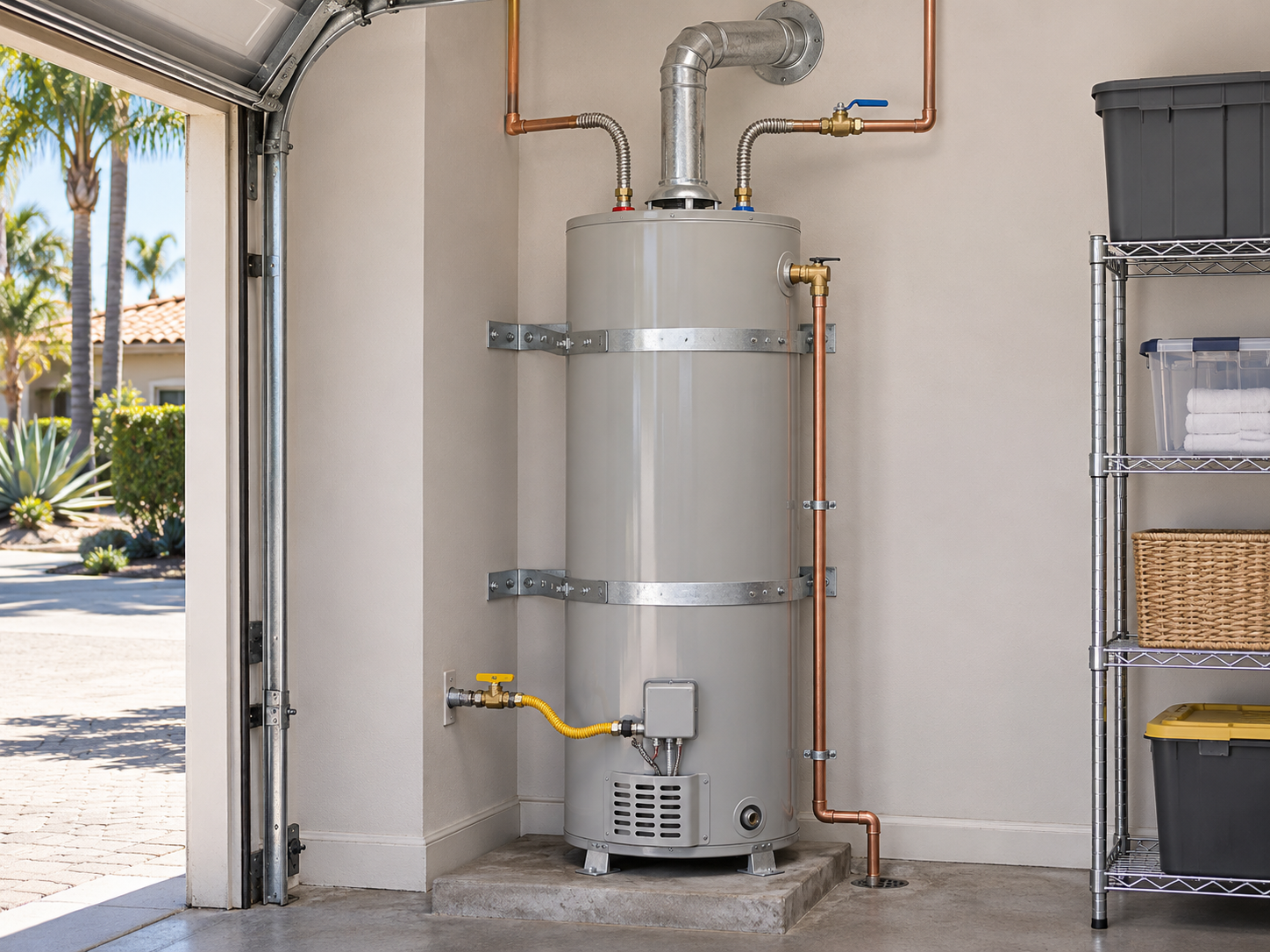
If Your Water Heater Is Leaking
Not every puddle means a failed tank. Water at the base can come from a loose fitting, a dripping drain valve, condensation, or the relief valve discharging because of excess temperature or pressure. These are often repairable. Water seeping from the tank body itself usually means internal corrosion has broken through, and replacement is the only lasting fix.
If the leak is active, you can usually close the cold water shutoff above the heater to stop it from refilling. Leave gas controls and electrical disconnects alone unless you are sure how to operate them; we will make the unit safe when we arrive.
Water heater work is one part of the full range of home plumbing services we offer in Laguna Niguel. If water around the heater turns out to come from a supply line in the wall, our leak detection page explains how that is traced.
Lukewarm showers again?
Note the brand and how long the problem has been going on.
What to Have Ready When You Call
- Whether the unit is gas or electric, and tank or tankless.
- The brand, plus the model and serial number from the rating label if you can see it safely.
- Roughly how old the unit is, if known.
- What changed: no hot water, less hot water, odd noises, discolored water or a leak.
- Where the heater is located, such as a garage, closet or attic.
Water Heater FAQs
Can a leaking tank be repaired?
If the water is coming from a fitting, valve or connection, often yes. If it is coming through the tank wall, no. The steel has corroded through, and the tank needs to be replaced.
Why does my hot water keep changing temperature?
Inconsistent hot water can come from a failing thermostat or element, sediment buildup, a faulty mixing valve, or, on tankless units, flow rates that drop below what the heater needs to fire reliably. Diagnosis tells us which.
Is it worth replacing a tank with a tankless unit?
It can be, depending on your hot water use, available space and what changes the installation would need. We will walk through the practical tradeoffs for your home rather than recommend one type for everyone.